
From school all the way through to independent adulthood.
Parinaama works on the conditions that determine whether education is possible at all — through health, counselling, child protection, skill building, and school re-enrollment, in the communities where children need it most.
What is Aspire
The journey BEYOND literacy.
Most education programmes start at the classroom door. Aspire starts much earlier — at the question of whether a young person will reach that door at all, and whether anyone will come looking if they don’t. In the communities we work in, the barriers to education are rarely academic. A family without stable income pulls its children out of school. A girl with no access to health support stops attending. A teenager with no one to talk to about what they’ve experienced stops believing school is for them.
Aspire works on all of this — through health interventions, counselling, child protection advocacy, teacher training, skill building, and school re-enrollment.
Aspire is delivered by our Sathis — community trust-builders who are already present in the village, known to the families, and trusted in ways that no external programme ever could be.
13 years of groundwork
2012
Founded • community health work begins
2014
2017
Digital literacy centres established
2020
Women’s leadership & PRI training
2026
Aspire — built on all of the above
How it works
The Aspire model
Five steps from an adolescent at risk of falling through the cracks to one who has a clear path forward — held by their community every step of the way
1
Identification — finding young people at risk
Sathis conduct community advocacy meetings with parents, local teachers, and government bodies to identify adolescents who have dropped out, are at risk of dropping out, or are enrolled but not progressing.
2
School enrollment and re-enrollment
Children and adolescents are enrolled or re-enrolled into the formal school system. We work directly with families and local authorities to remove the barriers — financial, social, and logistical — that kept them out.
3
Follow-up — staying the course
Regular follow-up visits by Sathis track attendance, monitor progress, and provide early intervention when a young person shows signs of disengaging. Continuity is everything.
4
Career counselling and pathways
Structured sessions help adolescents — especially girls — understand what is possible beyond their village. We connect them to information about higher education, vocational training, and employment pathways they would otherwise never encounter.
5
Mental health and child protection
We conduct mental health awareness workshops and child safety sessions — equipping young people and communities with the language, knowledge, and confidence to speak up, seek help, and protect one another.
6
Holistic development — beyond the classroom
Alongside academic support, Aspire connects young people to the broader ecosystem around them. Health and hygiene classes for adolescent girls. Digital literacy sessions that open up the world beyond the village. Community initiative workshops that build civic awareness, leadership, and a sense of agency over their own futures.
Supporting programmes
Three pillars of the Aspire ecosystem
Education & leadership
Digital Literacy
Computer literacy classes for rural and tribal youth in Odisha and Jharkhand — and for Master Book Keepers of Self-Help Groups. A young person who can navigate a computer can access career information, online learning, and vocational pathways that would otherwise be invisible to them from within their village.
Grassroots Women's Leadership
Training Self-Help Groups and Panchayat Raj Institutions in leadership, self-awareness, and collective action. Communities where women hold power are communities where girls are allowed to stay in school, aspire to careers, and are protected from early marriage.
SHG & PRI Capacity Building
Leadership workshops, educational resources, and one-on-one mentoring for SHG and PRI members. These are the local governance structures that, when strong, advocate for girls’ education, push back against dropout, and create the community accountability that Aspire depends on.
Health & Wellbeing
Menstrual Hygiene Management
500+ information and discussion sessions in Anganwadi centres, Government schools, and community halls across Bihar and Jharkhand. Every girl who misses school during her period is a girl Aspire cannot reach — menstrual health is not a side issue, it is a condition for attendance.
Sanitation & WASH
Community-wide health and hygiene campaigns in 100+ schools across Odisha, Bihar, and Jharkhand — handwashing, open defecation-free initiatives, and the first Community Sanitation Complex in Marchi village, Bihar. Clean schools are schools girls stay enrolled in.
Health Camps & Nutrition
Routine dental, eye, and mother-and-child health camps — alongside nutrition sensitisation addressing anaemia in adolescent girls and malnutrition in young children. An anaemic teenager cannot concentrate. A malnourished child does not reach adolescence ready to aspire.
Community Health Volunteers
Trained Community Health Volunteers serve as knowledge brokers on maternal and child health, infectious and non-communicable diseases, and emergency care — ensuring that health information reaches households that no clinic or government programme has ever reliably served.
Health Product Manufacturing
Women trained in local production of sanitary napkins and soaps through our manufacturing unit in Jharkhand. When health products are made by women in the community and available locally, the barriers to health — and to school attendance — come down.
Climate & Preventive Health
Awareness programmes on climate-related health risks and clean water practices. Erratic monsoons, heatwaves, and contaminated water keep children out of school as much as poverty does — preventive health is inseparable from education continuity.
Livelihoods & Enterprise
Microenterprise Development
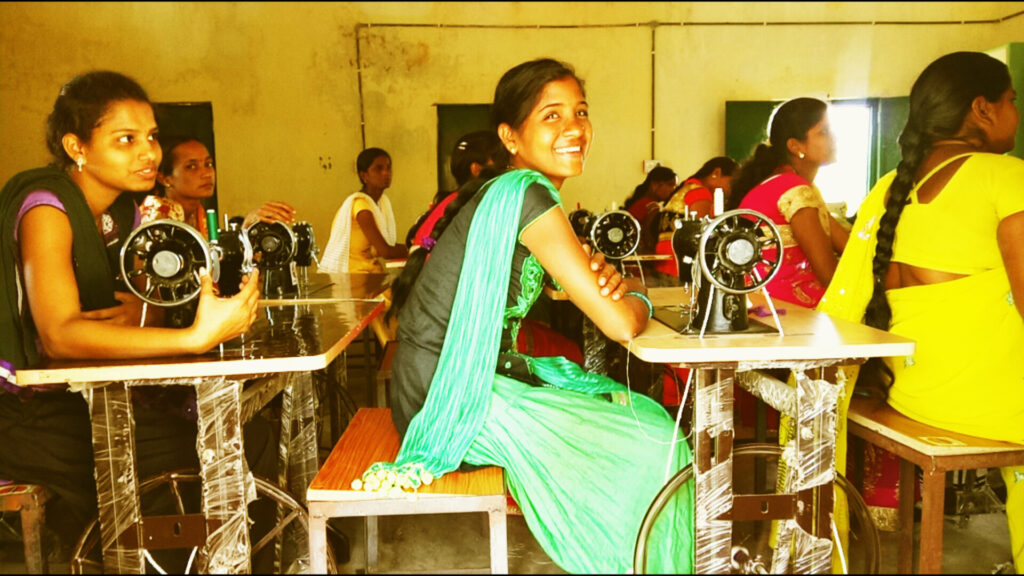
Garment manufacturing in Odisha. Soap and sanitary napkin production in Jharkhand. Mithila art, candle making, and confectionery across Bihar and Jharkhand. When a mother earns her own income, her adolescent child is far less likely to be pulled out of school to work or to contribute to the household.
Nutrition-Sensitive Agriculture
Garment manufacturing in Odisha. Soap and sanitary napkin production in Jharkhand. Mithila art, candle making, and confectionery across Bihar and Jharkhand. When a mother earns her own income, her adolescent child is far less likely to be pulled out of school to work or to contribute to the household.
Producer Group Collectivisation
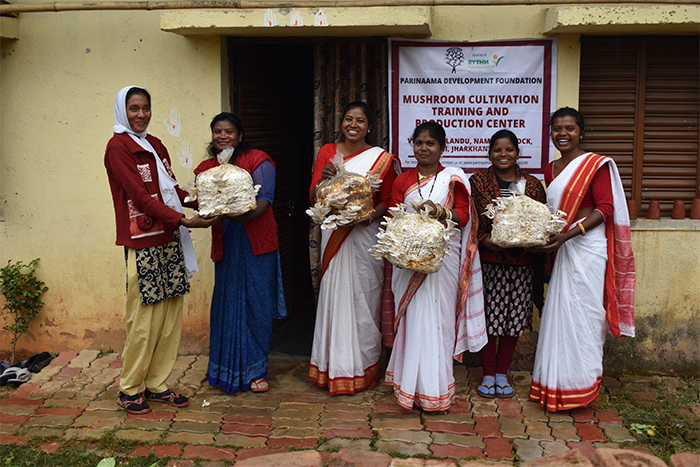
Mushroom cultivation and integrated farming workshops for landless and small-landholder women farmers in Jharkhand and Bihar. A household that can feed itself adequately is one where children arrive at school — and at Aspire — with the energy to learn.
14 years of groundwork
2012
Founded • community health work begins
2014
2017
Digital literacy centres established
2020
Women’s leadership & PRI training
2026
Aspire — built on all of the above