Getting every child reading, writing, and reasoning.
Millions of children in India attend school but cannot read a single sentence. We find them, bring them into community learning centres, and give them the foundational skills that make all future learning possible — in six months.
Primary beneficiaries
Children
Out-of-school children aged 6–14, and those enrolled in school but yet to achieve foundational literacy or numeracy. Children from Adivasi, Dalit, and OBC communities are our priority.
Secondary beneficiaries
Community Leaders
Double impact • one intervention
What is DreamBright
FOUNDATIONAL LITERACY AND NUMERACY
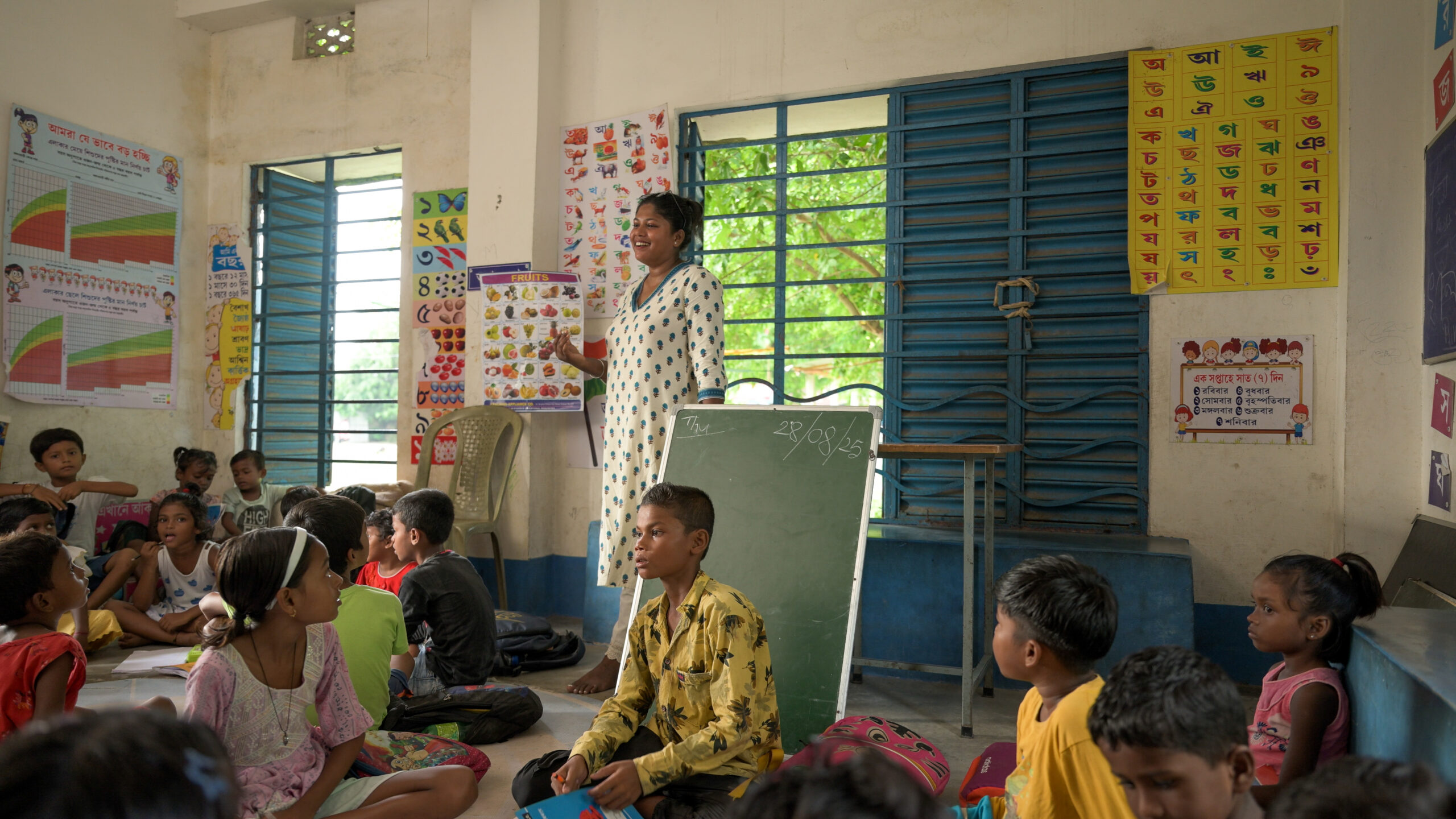
Project DreamBright was built on a simple observation: the problem of foundational learning is not just about children — it is about communities. A child learns best from someone familiar. A local teacher earns income. A village sees that education is possible. Everything changes together.
We have been running learning centres for three years across Jharkhand, West Bengal, and Odisha. We have built the model. We have seen what works. Now it is time to scale.
How it works
The DreamBright model
Five steps from a child who cannot read to a child who can. Delivered by people from within the community, in spaces built by the community, in a language the child already speaks.
1
Survey — finding the children
Our Sathis go door to door in every village, identifying children who are out of school or enrolled but not learning. No child is invisible to us.
2
Enrolment — bringing them in
Children are enrolled in the nearest Parinaama learning centre — a familiar space in their own community. Parents are engaged from the start.
3
Teaching — a familiar face
Each centre is led by a trained local teacher — someone from the same community who the children already know. We recruit, train, and pay them. They stay.
4
Learning — through play
Children learn through interactive tools, games, audiovisuals, quizzes, and co-curricular activities. Learning should feel like something a child wants to do, not something done to them.
5
Assessment — literacy achieved
After six months, every child is assessed using Parinaama's own grading framework. Progress is tracked from intake to completion, aligned with the national NIPUN Bharat benchmark.
How it works
The DreamBright model
Five steps from a child who cannot read to a child who can. Delivered by people from within the community, in spaces built by the community, in a language the child already speaks.
1
Survey — finding the children
Our Sathis go door to door in every village, identifying children who are out of school or enrolled but not learning. No child is invisible to us.
2
Enrolment — bringing them in
Children are enrolled in the nearest Parinaama learning centre — a familiar space in their own community. Parents are engaged from the start.
3
Teaching — a familiar face
Each centre is led by a trained local teacher — someone from the same community who the children already know. We recruit, train, and pay them. They stay.
4
Learning — through play
Children learn through interactive tools, games, audiovisuals, quizzes, and co-curricular activities. Learning should feel like something a child wants to do, not something done to them.
5
Assessment — literacy achieved
After six months, every child is assessed using Parinaama's own grading framework. Progress is tracked from intake to completion, aligned with the national NIPUN Bharat benchmark.
The six-month course
What a child learns
01
Reading with understanding
From recognising letters to reading words to comprehending a full paragraph. Children are assessed at each stage — no child moves on until they are ready.
02
Writing with purpose
03
Numeracy and reasoning
Aligned with NIPUN Bharat
Our assessment framework is aligned with the Government of India's National Initiative for Proficiency in Reading with Understanding and Numeracy — every child we assess is measured against the national learning benchmark.
Our learning centers
Classrooms built around children
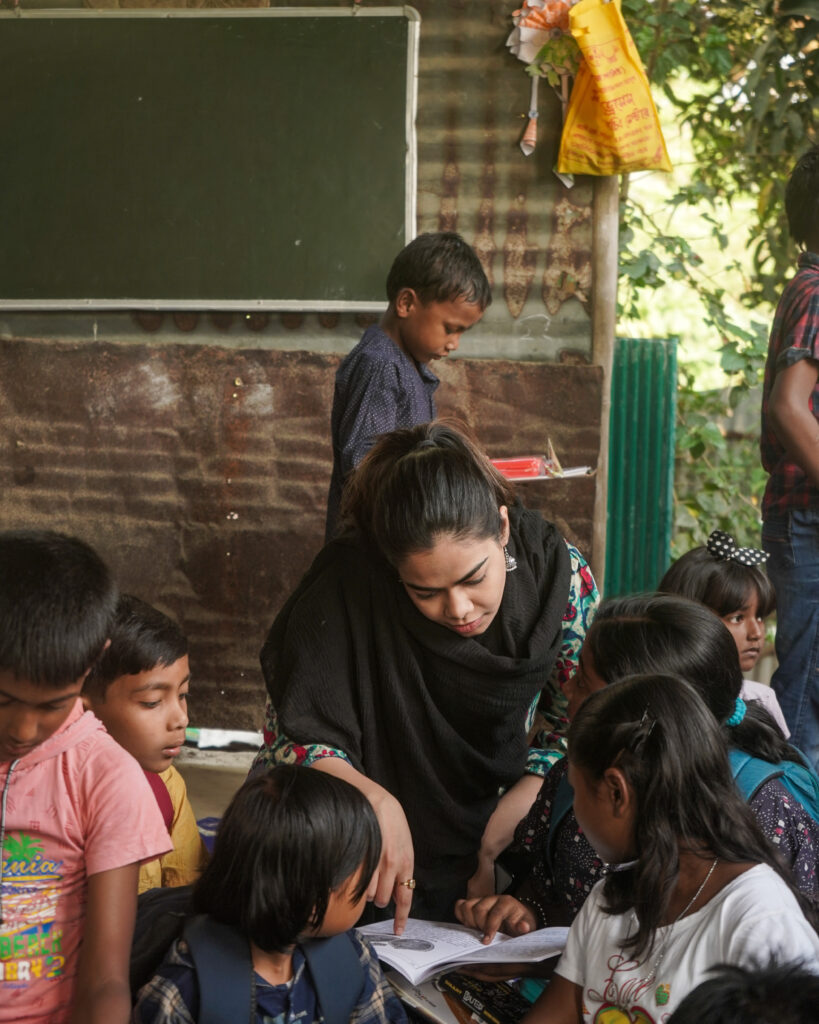
We meet children where they are. Our learning centres take many forms — and every form is valid, as long as it serves the child.
Solid classroom spaces
Permanent or semi-permanent structures — community halls, rented rooms, school buildings. These centres have consistent infrastructure, regular timetables, and serve as anchors for the wider community.
Makeshift and open spaces
Under trees, on verandas, in courtyards. In our most remote geographies, a fixed space is not always possible. We work with what exists — and what exists is enough when the teaching is right.
16
Active centres across Jharkhand, West Bengal & Odisha