
ADVOCACY & REACH
First-movers in some of the remotest locations
We work in
Bihar • Jharkhand • Odisha • West Bengal • Andhra Pradesh • Delhi
A few of the places we work
The landscape behind the numbers
These are some of the communities we work in, each with their own geography, their own history, and their own particular distance from the systems that should be serving them.
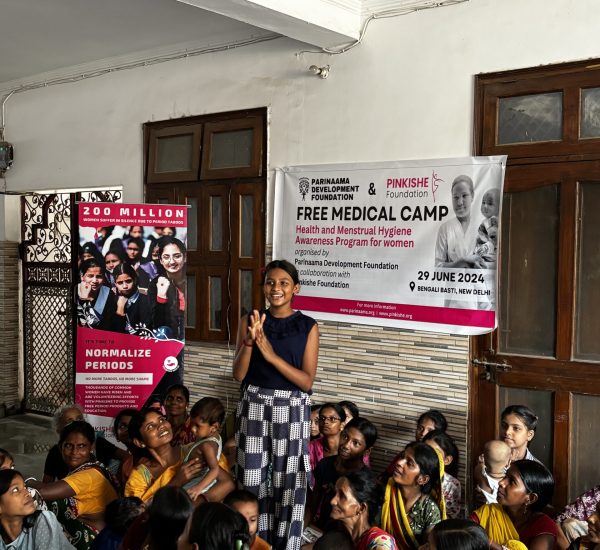
Jharkhand
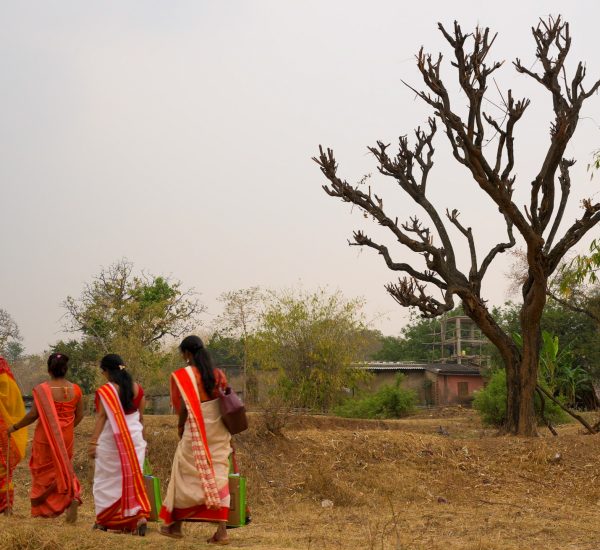
The tribal blocks of Bundu
In the Adivasi heartland of Jharkhand, communities face displacement pressures, forest rights disputes, and the erosion of traditional livelihoods. The road to many of the villages we work in becomes impassable after the first monsoon rains. Our Sathis walk when vehicles cannot go.
West Bengal
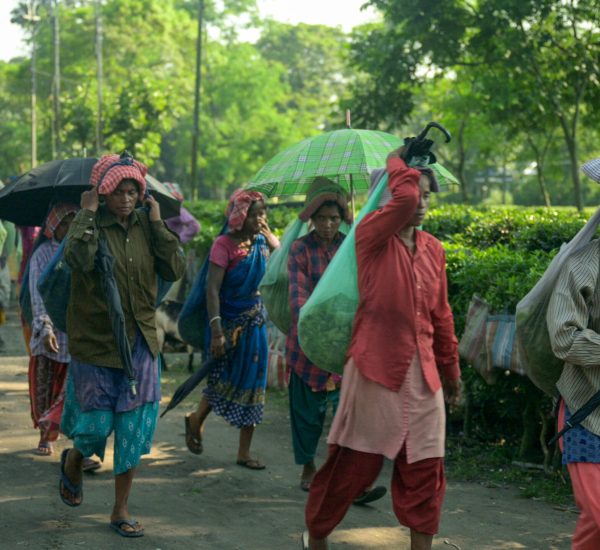
Tea gardens of Jalpaiguri
The tea garden belt of North Bengal is one of the most geographically and socially isolated landscapes in eastern India. Workers live in near-feudal dependency on the plantation economy without land rights, without formal documentation, and with limited access to government services that stop at the plantation boundary.
Odisha
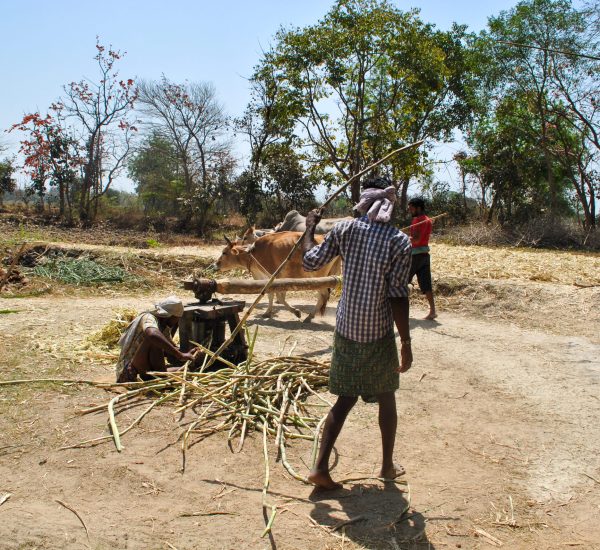
Agricultural communities of Balangir
Bihar
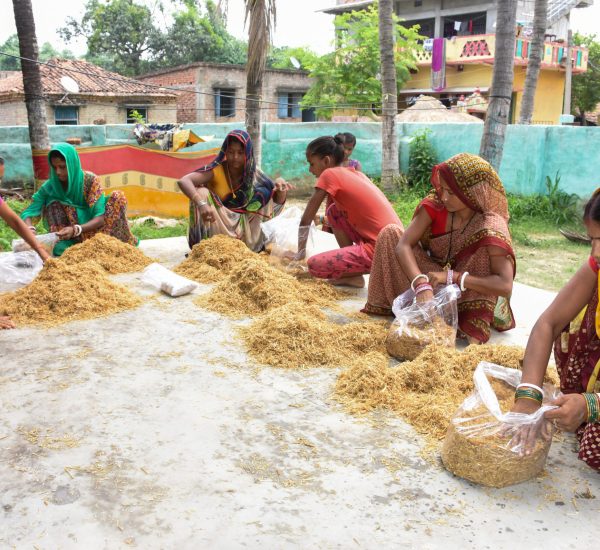
Rural communities of Bihar
Delhi
Urban settlements, Delhi
Advocacy
The Saathi Model
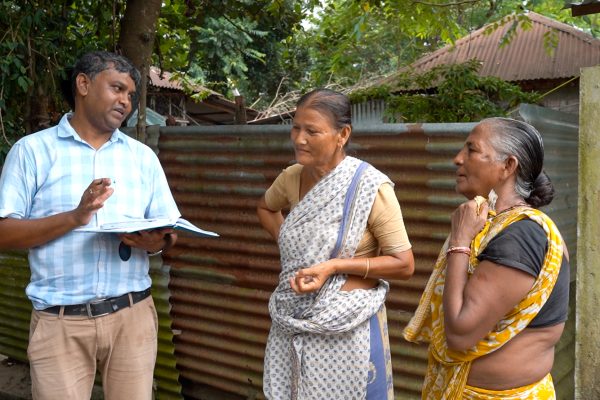
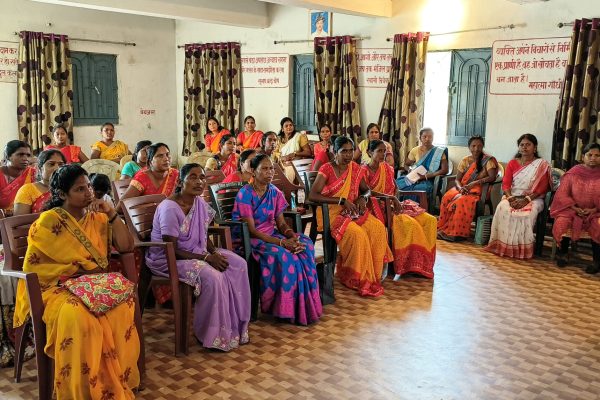
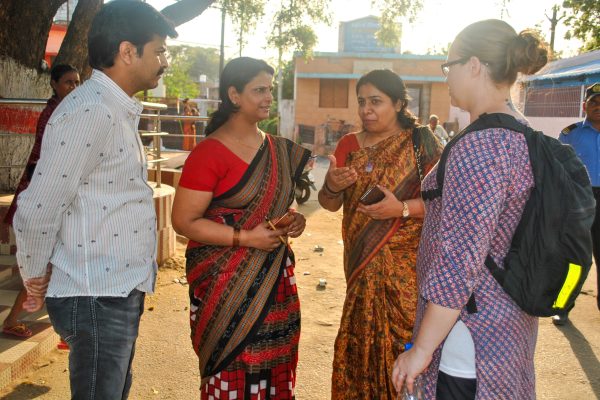
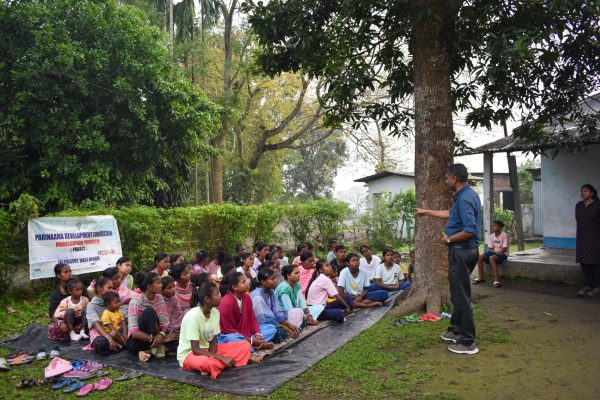
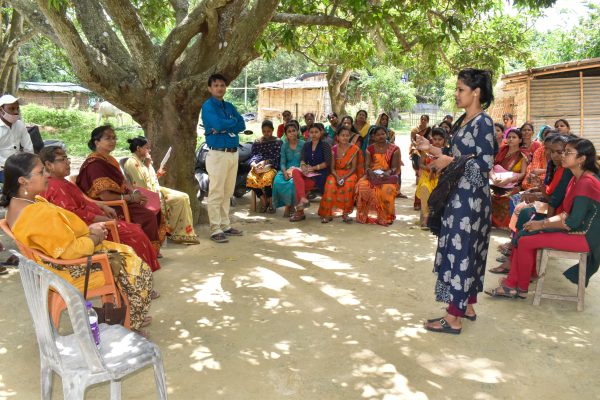
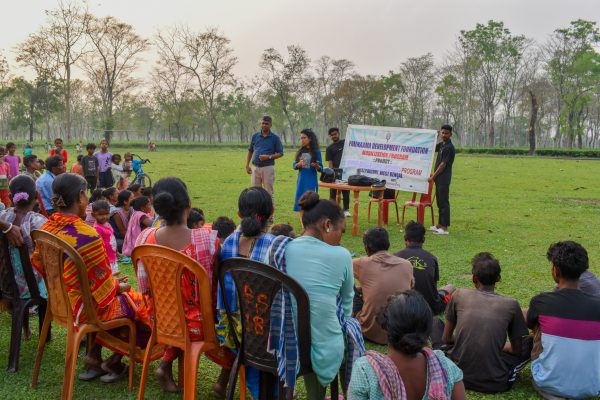
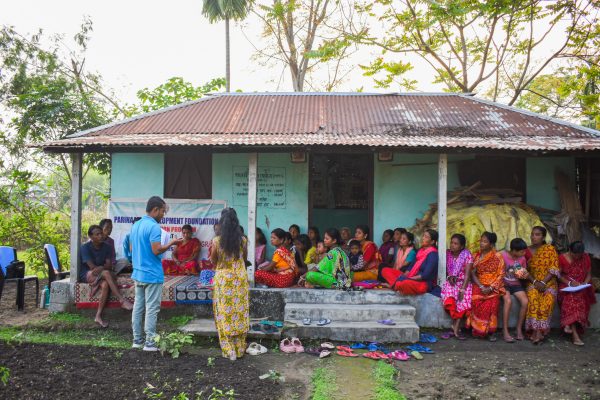
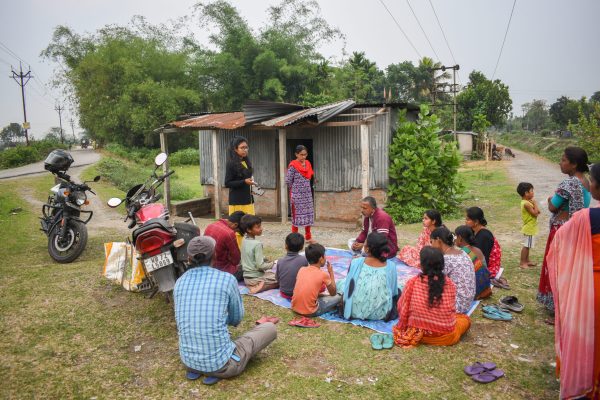
At the heart of Parinaama’s work is the Saathi — a trained community member who lives and works within the very village they serve. Saathis build relationships with families, conduct door-to-door surveys to identify children who need support, convene Jan Sabhas with parents and local leaders, lead school enrollment drives, and run child protection workshops with adolescents and communities. Their sustained presence is what makes lasting change possible.
The reality on the ground
What remote actually means
01
Roads that disappear
02
Governance on paper only
03
No signal, no power
04
Trust earned slowly
Who we work with
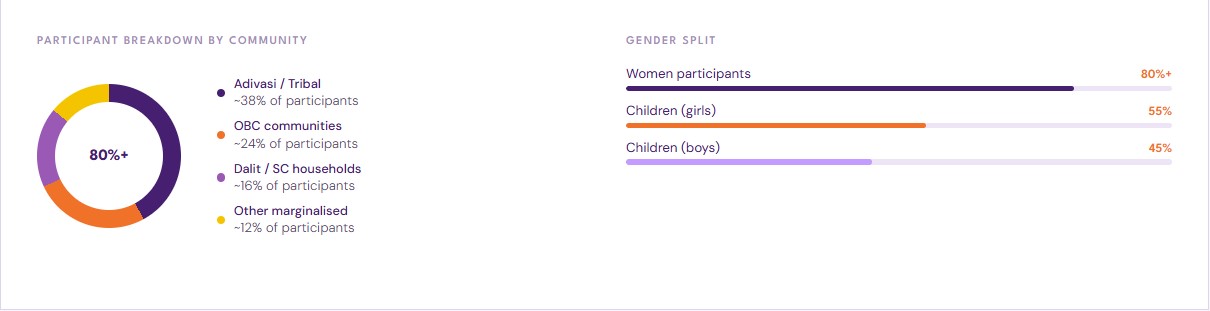
Our participants
Jharkhand • Odisha
Adivasi communities
All states
Dalit households
All states
OBC communities
The change we're building belongs to all of us
Sign up to receive our annual reports, field updates, and stories from the communities we work with – straight to your inbox